
25 Wisconsin Communities Are Now Rebelling Against Flock Cameras
Across Wisconsin recently, a strange sight has been popping up along city streets: license plate cameras wrapped in plastic bags, like a car mirror covered up for a paint job.
The bags aren't there by accident. From Kenosha to Chetek, a growing number of Wisconsin cities and counties are covering up, switching off, or completely cutting ties with Flock Safety, the company behind many of the state's automated license plate readers.
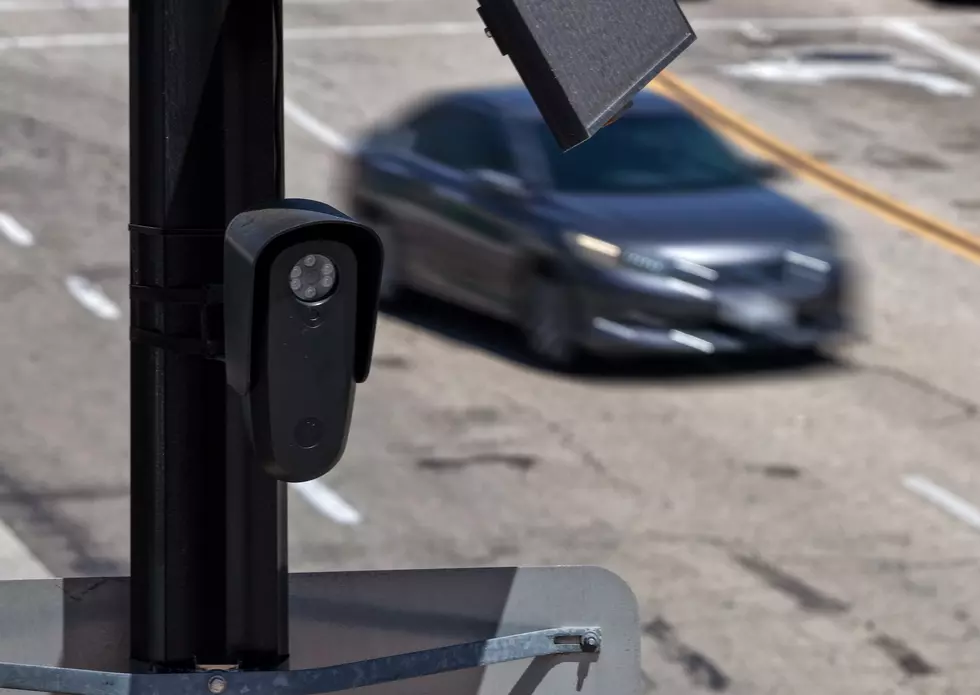
Flock cameras sit on poles near intersections and city entrances, capturing an image of every passing vehicle and logging its plate, make, model, and other details.
The system flags vehicles tied to stolen cars, warrants, or missing person cases and alerts police in real time.
They've spread fast. By this spring, more than 200 police departments in Wisconsin were using them. In Wausau alone, 20 cameras were capturing roughly 3 million vehicle images a month.
A Tool Police Say Gets Results
Ask most police chiefs, and they'll tell you the cameras work. Milwaukee Mayor Cavalier Johnson has said the technology has "located critical missing persons and helped apprehend violent criminals."

In Stoughton, police credited the cameras with identifying people involved in hit-and-runs and retail thefts.
However, in that same breath, Mayor Johnson acknowledged the cameras have also been misused in several notable instances. That's where the story in Wisconsin takes a turn.
Where the Trust Broke Down
The biggest spark came from how Flock handles the data. Racine County's sheriff learned the company kept anonymized vehicle data for up to five years and marketed it through a product called Traffic Analytics. Flock maintains that the analytics feature is separate from its license plate platform and that it does not sell the data.
In Sheboygan, the mayor said a company representative tried to sell the city its own data. "They're collecting our data. Then they go around to another department in the city and try to sell us back our own data," Mayor Ryan Sorenson said.
Then there's misuse. Officers in Milwaukee, Menasha, and Kenosha County have faced charges for using Flock to track romantic partners, and a FOX6 investigation counted at least 11 alleged misuse cases in Wisconsin.
Courts are weighing in too, with a recent Wisconsin ruling that Flock camera history can support a search. Meanwhile, the Wisconsin Institute for Law and Liberty has sued 11 Waukesha County communities and the county itself, asking a court to require officers to get a search warrant before searching the Flock database.
Wisconsin Cities and Counties Cutting Ties With Flock
Needless to say, Flock cameras have become increasingly controversial, and now the following communities have decided to pull the plug.
Mayor Jake Woodford announced in May that the city would stop using Flock, saying, "Concerns about the integrity of Flock's underlying system have eroded our trust." The city formally terminated the contract in July.
In northwest Wisconsin, Chetek's Common Council voted at the end of August to cover the city's two cameras and break its three-year contract. The cameras had been purchased without council approval, and the police chief reportedly threatened to run background checks on residents who criticized them.
The Dane County Board voted 32-1 in April to cut the $80,000 contract for the sheriff's office cameras. The sheriff's office stopped using Flock at the end of April and has been looking at other vendors.
Closer to home, Douglas County's trial run with Flock has ended. County officials said the county will not pursue a contract, and data from the demo period is automatically deleted after 30 days.
Fitchburg's council voted unanimously in May to end its contract. Residents and officials raised concerns about how other agencies were using data through Flock's national search feature.
Kaukauna let its three-year contract for six cameras expire without renewal in June. "It is not fiscally responsible for the city to continue to invest in the Flock Cameras with the concerns that have been raised," Police Chief Jamie Graff said.
Kenosha police are ending their Flock contract a year early and switching to Axon. The city found no officer misuse of its own system, but Chief Patrick Patton said, "The more questions we had, the more questions we tried to get answered, the more horror stories we heard."
After the mayor and police chief had the cameras covered during a review, the city council voted unanimously to terminate its Flock contract.
Menasha covered its cameras on Sept. 1, and the council followed with a 7-1 vote to stop funding the program. The move came weeks after a former Menasha officer was convicted of misconduct for using Flock to stalk his ex-girlfriend.
Monona had used three Flock cameras since 2023, but Police Chief Brian Chaney decided not to renew the contract this spring. He pointed to the county's decision, privacy concerns, and the staff time spent answering open records requests about the system.
Neenah's Common Council voted unanimously on Sept. 16 to terminate its contract early. Police Chief Aaron Olson recommended the move after learning that data from other Wisconsin departments was made public through records requests in other states, and the city won't pursue a replacement until state lawmakers set clearer rules.
Oconomowoc's council voted to cancel its contract last month, even though ending early will cost the city about $18,000 in 2027. Mayor Matt Rosek said the question came down to "security, accountability, privacy, and public trust." Separately, records show the local school district leases four Flock cameras of its own at the high school.
Oshkosh had one of the most dramatic turnarounds. The council approved a renewal, then rescinded it unanimously less than 24 hours later after the police chief said Flock representatives made false statements about the system's tracking features. "I don't know how I can make a decision... if you lie to me," one council member said.
Mayor Cory Mason broke a 7-7 tie to end the city's Flock contract in 30 days. The cameras were to be covered and disabled right away so no new data is collected while police wrap up open investigations.
Sheriff Christopher Schmaling ordered all of his office's cameras taken down in early September after learning about Flock's data retention practices. "That is not what we agreed to, and it is not what the public was led to believe," he said.
Sheboygan had run 15 Flock cameras since 2024. Public works crews wrapped them in plastic in late August, and the council followed with a unanimous vote to end the contract at year's end. The mayor cited "an erosion of trust from Flock itself and how they were using our data."
Stoughton's cameras had only been up since May when residents began raising concerns. The council voted unanimously to terminate the agreement in July, and the police chief said there are no plans for another plate reader system.
Sturgeon Bay's council ended its two-year contract in April. The assistant police chief made the case for the cameras right up to the end: "Does it greatly enhance our abilities? Absolutely. That's what's frustrating."
Verona was one of the first in the state to act, pulling its three cameras in late 2025 after learning officers from other jurisdictions had accessed Verona's cameras on behalf of immigration agents.
Waukesha's council voted not to fund the program beyond 2026. Police Chief Dan Thompson said, "Transparency, accountability, and public confidence are fundamental to our mission."
Cameras Covered or Switched Off, With Decisions Pending
The sheriff's office, along with police in Fond du Lac, North Fond du Lac, Ripon, and Waupun, suspended their programs in early September after learning agencies in other states had released their search data through open records requests, thanks to Flock's shared national network.
Manitowoc deactivated all city-owned cameras in September, even though leaders said the city had no local problems with the technology. Its contract runs through early 2027, and privately owned Flock cameras at local businesses aren't affected.
All 10 cameras are bagged under an order from Mayor Mike Wiza, who said the city will very likely not bring them back. The city pays $27,000 a year, and a final decision still has to go through the police and fire commission and the council.
Waupaca County
Law enforcement agencies across Waupaca County have suspended their use of Flock. They stressed the decision wasn't about local misuse, but about losing control of sensitive information once it enters the larger network.
The Winnebago County Sheriff's Office suspended its program in early September, and police in Fox Crossing, Winneconne, and UW-Oshkosh switched off their cameras too.
Tightening the Rules Instead
Milwaukee police haven't dropped Flock, but they've narrowed who can use it. Access is now limited to supervisors, data is no longer shared with neighboring jurisdictions, and searches are restricted to serious crimes.
Milwaukee County is going further. The county's executive plans not to renew the county's contract in 2027, and on Oct. 1, the County Board voted unanimously to remove Flock cameras from county parks. The sheriff's office had credited those cameras with a 43% drop in certain crimes around the parks.
Green Bay voted this spring to extend its contract for five more years and add drone technology. In September, city leaders said they're keeping the cameras while tightening search, sharing, and retention rules, adding that a recent audit found zero instances of misuse.
Not Everyone Is Walking Away
For every city covering its cameras, others are standing firm, at least for now. In Wausau, Mayor Doug Diny's 2027 budget keeps the $50,000 payment for the city's cameras, even as some push to cut it. The police chief recently told a city commission that Flock hasn't violated the city's contract.
SEE NOW: What Does The New U.S. Ban on Canadian Alcohol and Products Actually Cover?
Marathon County hasn't announced a decision either, though its agreement would let it leave for about $4,000.
The debate isn't stopping at the state line, either. In Minnesota, the Plymouth City Council recently voted to cancel its Flock contract after a resident was wrongly stopped as a suspected car thief.
What's striking about Wisconsin's version of this debate is that very few of these leaders argued the cameras don't work. Police chiefs from Sturgeon Bay to Neenah defended them to the end.
The problem was never the lens on the pole. It was what happened to the pictures after they were taken. Whether it's a license plate or a phone number, the lesson carries well beyond Wisconsin: when you hand over information, you deserve to know where it goes.
In a lot of Wisconsin communities, the answer came back fuzzy, and that was enough to reach for the plastic bags.
The 10 Safest Cities In Wisconsin This Year [2026]
Gallery Credit: Lauren Wells
15 Most Common Items Stolen From Wisconsin Target Stores
Gallery Credit: Lauren Wells