

‘Primetime’ Review: The Dark Reality Behind Reality TV
To Catch a Predator was undeniably compelling television. Through the use of hired decoys, Dateline NBC journalist Chris Hansen lured grown men to suburban homes where they expected to have sex with minors. Instead, they found Hansen, who confronted them with a handful of graphic chat transcripts and a bevy of sarcastic one-liners. Caught red handed, Hansen would interrogate the men about their lives and the choices that led them to this point, and then, right on cue, the police would arrive to make an arrest.
Justice served, right? It might have been, if To Catch a Predator had actually tried to pursue it. Instead, the new film Primetime suggests, Hansen and the creators cared far less about catching predators than catching viewers’ attention with the most dramatic television possible. And the film, directed by documentarian Lance Oppenheim in his narrative feature debut, matches those ideas with a lurid, heavy-handed style. I’m not sure Primetime ultimately has a lot to say about this show that hasn’t already been said elsewhere, but it certainly declares that message very loudly.
READ MORE: The Best Movies of 2026 So Far
That includes the performance of star Robert Pattinson as Hansen. Nevermind that Pattinson looks nothing like the Dateline NBC host and only occasionally sounds like him; fidelity to his subject is not really what he or Oppenheim are going for here. Primetime’s Chris Hansen is barely even a journalist; he’s more of a self-obsessed TV star high on his own power and fame, and fixated about maintaining them at any cost. Returning from a business trip late at night, he rouses his young sons from bed and forces them to watch the latest Predator episode with him. When his wife Mary (an underutilized Anna Faris) stumbles upon this strange scene, he blames the kids, saying they woke up and wanted to see what he was doing. The clear implication: This supposedly righteous moral crusader exposing all of society’s ills was no saint himself.
Oppenheim follows Hansen from a televised sting operation in Long Beach, California — where Hansen can hardly contain his excitement as he busts a would-be sexual predator — to the offices of NBC, where the skeptical network president (Jeff Zucker, playing himself in a very surreal cameo) concedes that audiences can’t get enough of To Catch a Predator. He gives Hansen his own time slot opposite Lost, then the hottest show on television, and orders him to deliver a show worthy of the competition.
A giddy Hansen dances with joy at this huge opportunity, then schemes with his producer Andie (Merrit Wever) about ways to juice their ratings. The third member to join their team is an out-of-work actor named Dan (Skyler Gisondo, giving Primetime’s saddest and most effective performance), who is so desperate to get his SAG card that he agrees to play the role of a Dateline decoy.
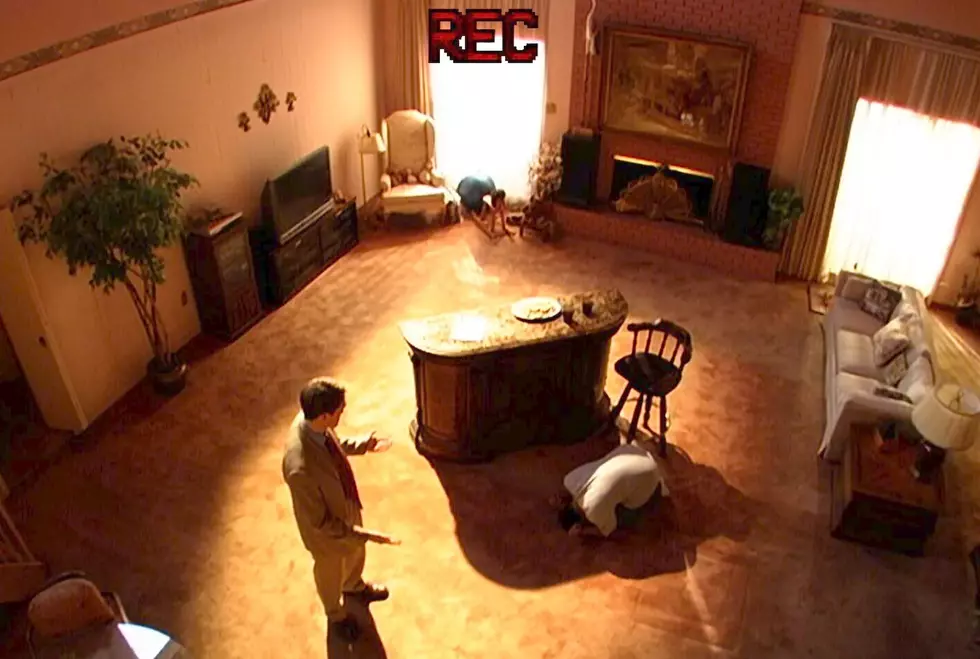
During Dan’s first shoot with Hansen and his crew, a man arrives seeking sex and immediately exposes himself to the cameras. Dan is mortified; Andie, watching the monitors in the back of the house, is delighted, and declares that the network will love everything they are doing.
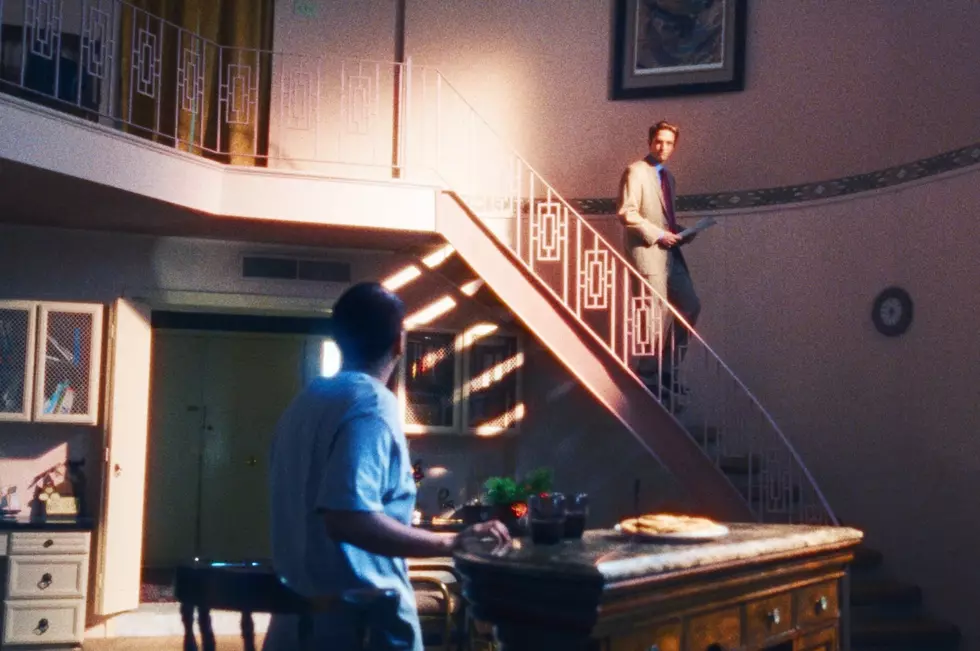
Oppenheim keeps jumping between Chris Hansen, Andie, and Dan’s stories when the Dateline cameras aren’t rolling, and draws equivalences between these wannabes who care more about their careers than the legal and moral ramifications of their actions. Their reckless quest for salacious footage brings To Catch a Predator to Texas, where they uncover a potential criminal within the local government. The pursuit eventually leads them to the suspect’s front door, sparking a tense standoff.
That sequence is based on real events that occurred during the filming of To Catch a Predator, and a lot of what transpires in Primetime — including Hansen getting busted himself while in the midst of an extramarital affair — are based on things in the public record. But the movie’s depiction of those events are hyper-stylized with colorful lighting, ominous music, split screens, intricate montages, grainy digital cinematography, repeated visual motifs (like plates of chocolate chip cookies) and Pattinson’s committed but one-note performance as Hansen.
Primetime’s version of that Texas sting, for example, takes place on a dark and stormy night illuminated by the red and blue lights of squad cars. In truth, the whole operation went down under clear skies on a bright, sunny day. The heightened reality of Primetime and the cutthroat world of broadcast television in some ways reflects the film’s concept of Hansen himself, this amoral man so committed to his own stardom that he loses all perspective on his show’s impact.

Oppenheim’s choice to shoot his film in such sensational way mimics how the fictional Hansen sees life purely in the terms of a tawdry network serial. It’s as if Pattinson’s character has reshaped his existence (and by extension Primetime itself) into the shocking crime drama he wants to present to his audience.
While that choice might be a savvy bit of form following function, it also serves to dress up (and distract from) what is ultimately a fairly rote cautionary tale about this show and the evils of reality television in general. Pattinson’s Hansen and the rest of the cast spend a lot of time in Primetime standing in front of mirrors, implying that the behind-the-scenes machinations at To Catch a Predator reflected the twisted desires of society at large.
That might be an accurate assessment of this situation. But it’s also a message that’s obvious from the first moment Pattinson’s Chris Hansen emerges with a handful of papers and a plate of chocolate chip cookies, declaring that “a man must be held accountable for the decisions he makes.” How true.
Additional Thoughts:
-I cannot deny that my viewing of Primetime was colored in some ways by the recent film Predators, a far less melodramatic documentary about To Catch a Predator and its impact on society. That film covers many of the same events as Primetime and touches upon all the same themes about the irresponsible media, but does it in a way that’s far more thoughtful and arguably a lot more truthful. I would strongly recommend anyone interested in this subject check it out. My recommendation for Primetime is far more muted.
RATING: 5/10
10 Movies That Were Altered After They Were Released
Gallery Credit: Emma Stefansky
